

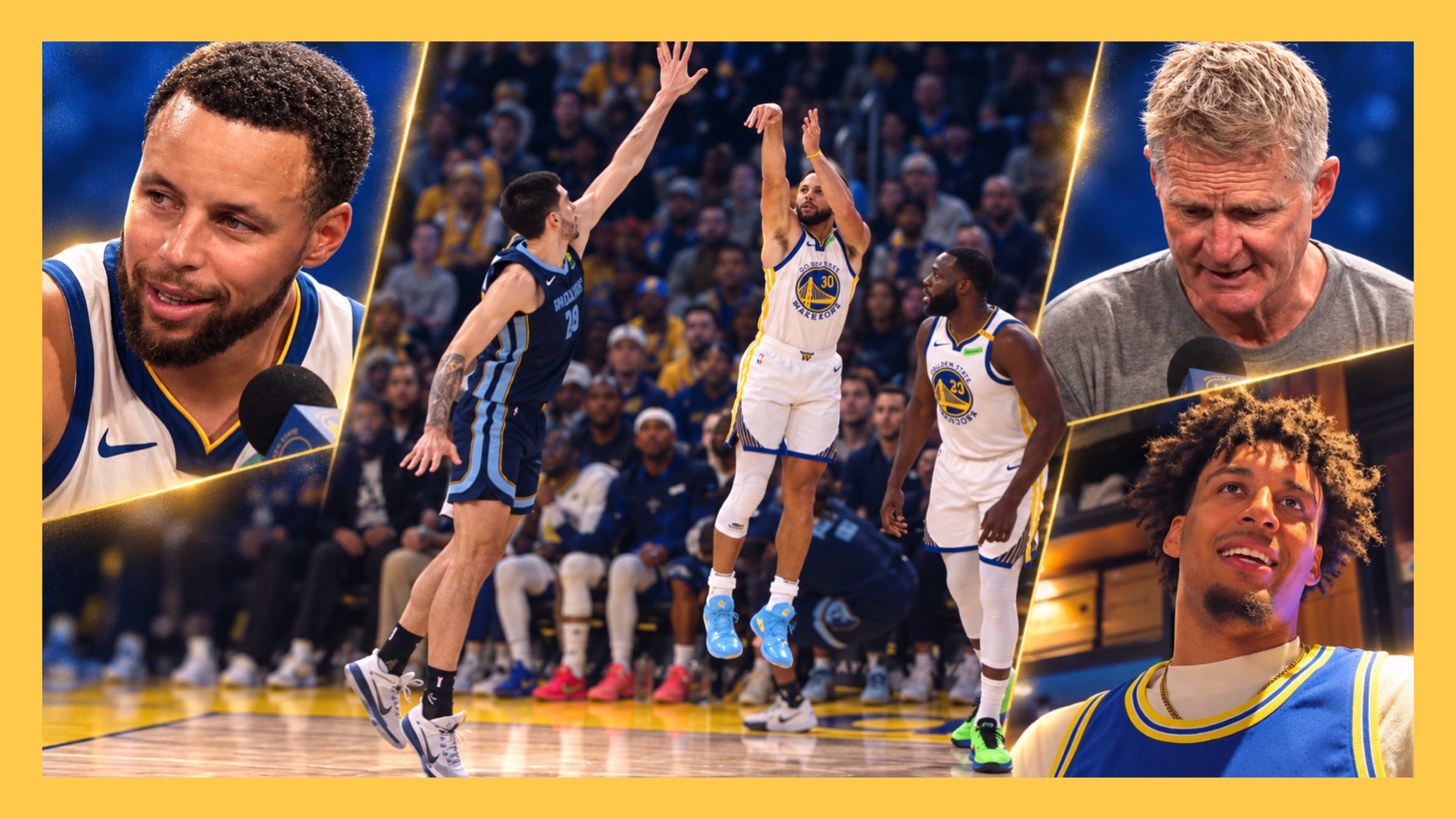
The Warriors were up 106-94 with 3:47 left against the Memphis Grizzlies on Friday night. De’Anthony Melton had just hit a corner three, Chase Center crowd was feeling pretty good about itself and Golden State appeared headed for its first victory of the season.
Instead, Memphis went on a 17-0 run before the Warriors added two meaningless free throws in the final second, leaving us with a 111-108 loss and an avalanche of predictable postgame conclusions about everything Steve Kerr supposedly needs to change.
Well, hold on. I spent a good portion of the final hour of our Let’s Go Warriors livestream rewinding those last possessions, watching the replays, and trying to figure out exactly what went wrong, rather than immediately jumping to the usual conclusions that one Wardell Stephen Curry II and Draymond Green are getting old, the Warriors shoot too many threes, or that Kerr needs to invent a brand-new go-to “pet play,” as Steph likes to call it. Check the timestamps and join the investigation, if you’d like:
And after going through the sequence, the answer was actually pretty simple, although it probably isn’t one that a lot of Warriors fans want to hear: Steph, Brandin Podziemski and Draymond were all outplayed by Memphis’ Jaylen Wells, Zach Edey and Cameron Boozer — and we should credit Jerami Grant’s defense, too — when it mattered most.
That’s it. Those are the three Warriors players I trust most to execute in crunch time right now, with Yaxel Lendeborg still learning the ropes as a rookie, and all three committed one particularly egregious mistake that helped determine the outcome.
Steph’s came first, when he lost track of Wells with 3:34 remaining, reacted late and fouled him on a made three-pointer. That’s a four-point play when you’re up twelve, and suddenly what looked like a comfortable lead was down to eight. I went back and watched that play again during the livestream, and there’s really no defending it. Steph simply lost his man and it was the kind of lapse that can completely change the momentum of a game.
Then came Podziemski, who had actually played a very good game up until the closing stretch with some excellent full-court attacks, three steals, drawn charges and even a promising two-man action with Melton that reminded me a little of the Steph-Draymond game.
But with 1:53 remaining and the Warriors still ahead by six, Podz dribbled the ball off his own foot against Grant’s pressure, setting up two Boozer free throws. You simply cannot commit that turnover in that situation, on an island at halfcourt, regardless of how many positive plays you’ve made during the previous 46 minutes.
And finally there was Draymond, whose moving screen against Wells with twelve seconds remaining effectively destroyed Golden State’s opportunity to answer Boozer’s go-ahead basket. Kerr then received a technical foul to further put the game out of reach, but it was Draymond’s illegal screen that created the problem in the first place.
You can certainly question whether Kerr should have called timeout after Boozer scored. That’s a legitimate coaching decision to debate, but it doesn’t absolve Draymond of his responsibility to set a legal screen. It looked pretty cut and dry to me: Dray was moving — yes, I vehemently disagree with Steve who, on the podium, claimed it was a legal pick, but I understand he had been irritated by the refs on what he counted as a cumulative “six” illegal screens.
Now consider what happened on the other side of the ball. Wells made the four-point play and played excellent defense on Steph. Edey contested and altered shots at the rim, blocked Steph’s late three-point attempt, grabbed a crucial offensive rebound and found Ty Jerome for the three on their own chaos play which started with a brilliant Podz pass deflection, actually.
That brought Memphis within one. Boozer made his free throws and then delivered the spinning turnaround over Podz that gave Memphis the lead. Memphis simply executed better on both ends of the floor than Golden State’s three closers.
The answer is not “shoot more twos”
This is where the postgame analysis started getting a little crazy because people were immediately claiming that the Warriors needed to stop shooting threes (0-for-5 between Curry and Podz down that stretch, I get it) and start attacking the basket, as though the final possessions consisted of four guys standing around waiting for Steph to launch desperation jumpers.
Except that’s not what happened. The Warriors actually attempted several two-point shots during the collapse, including an ill-advised missed Draymond attack versus Edey, Lendeborg missing a banker but getting it back and finding Podz for a missed open 3, and Steph thinking he could scoop it over — you guessed it — Edey!
Steph also penetrated and kicked the ball to an open Podz in the left corner for three, perhaps learning from his blocked attempt against Edey moments ago, which is exactly what you're supposed to do when the defense collapses. There was even a back-screen action designed to get Yaxel free, only for Grant’s length and excellent defensive positioning to disrupt it.
And when I reviewed the three-point attempts themselves, it became obvious that they weren’t all the same kind of shot. Yes, some of Steph's attempts were hurried or heavily challenged and I would have preferred better execution on those, especially the one Edey got a piece of, because we could see that coming. But there were also legitimate open looks, including Podz’s opportunity and the Curry attempt created after Draymond kept the possession alive with an offensive rebound tap to him — Wells was caught off-balance, but he tried his best to still contest.
The distinctions matter. A possession that generates a good shot and ends in a miss is not automatically a bad offensive possession, and one or two poor decisions do not justify abandoning the entire approach. If one of those open looks goes down, we're probably having a completely different conversation this morning.
Our three best players got the ball to the right place, but our three best players did not finish those plays.
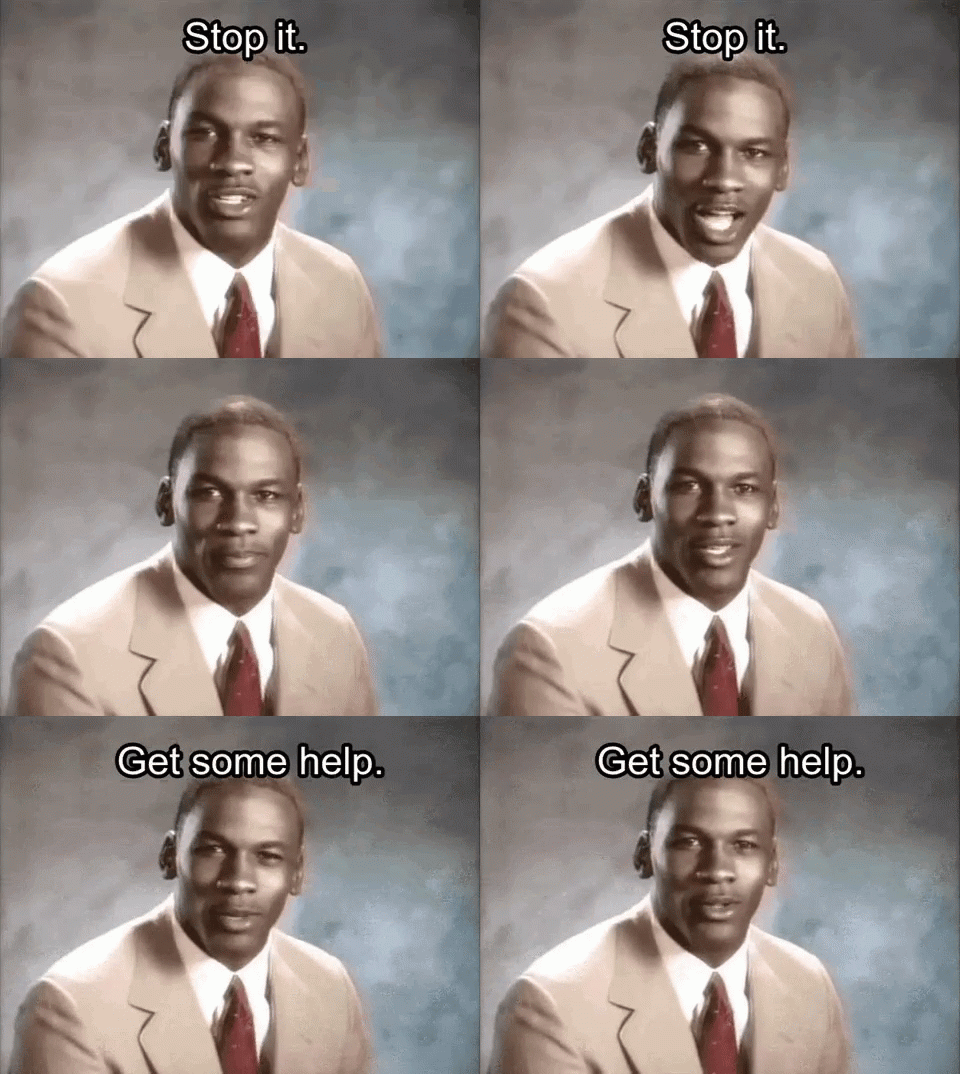
And that’s okay, DubNation! That’s why former coaches like myself dismiss games like this as, “It’s just one game,” while the rest of the world claims this is a disease and omg 😱 we have to face Minnesota and Denver next week, so that was actually so crucial and what do we do, we are the world’s most terrible NBA team now — it’s so embarrassing!
Stop it.
Questioning the 2-man game? Huh?
The other narrative that bothered me was the suggestion that Steph and Draymond are now somehow too old to execute their familiar two-man game, and that Kerr needs to replace it with some magical new pet play.
Take another look at the defense Memphis had available. Wells was hounding Steph on the perimeter, Edey was protecting the basket with a wingspan approaching eight feet, and Grant was using his own enormous reach to disrupt the action involving Yaxel. Between those three defenders, we’re talking about an average wingspan of approximately 7-foot-3.
That’s a whole lot of arms to navigate, even for an offense that has won championships running this stuff.
And lest we forget, the Steph-Dray two-man game helped win a game against the Clippers just three official games ago, in last season’s Play-In, so are we really prepared to declare that the entire concept no longer works because Memphis, with unusually long defenders and a well-executed defensive game plan — helped out by those three brain farts by Steph, then Podz, then Dray — managed to disrupt it on Friday night?
If we see the same problem repeatedly against a variety of opponents and your garden variety NBA team averaging 7-foot wing spans in their closing units has become the norm, then absolutely, let's revisit the question.
But there’s nowhere near enough evidence right now to mothball one of the most effective offensive combinations in Warriors history, particularly when the personnel currently available to Kerr still makes it the most sensible late-game option.
What we needed against Memphis wasn’t necessarily a different play. We needed Steph to make a better decision or hit an open shot, Podz to protect the basketball, and Draymond to set a legal screen.
Accountability ≠ over-reacting
I understand why fans were upset. I was upset, too. Nobody enjoys watching a twelve-point lead evaporate in less than four minutes, especially in a home opener following a blowout loss to the Lakers.
But what concerns me about these immediate sky-is-falling emotional reactions is how quickly a specific basketball failure becomes a sweeping indictment of something entirely different. A missed three becomes proof that the Warriors should never shoot threes in crunch time (by the greatest shooter of all-time, no less).
Or a well-defended action becomes proof that Steph and Draymond are too old. Or a devastating turnover becomes an excuse to start inventing trade proposals or calling for an entirely new offense.
Meanwhile, the actual mistakes that decided the game get buried beneath all that noise. That’s why we spend so much time going through the possessions on our livestreams and why I wanted to put this particular breakdown into writing.
Sometimes the answer doesn’t reveal itself until you’ve perused the play-by-play, watched a play three or four times. Sometimes the player you admire most is the one who deserves the criticism. Giving grace to these guys, something I’ve always believed in doing, doesn’t mean pretending those mistakes never happened.
I’m not giving up on Steph, Podz or Draymond, and I’m certainly not giving up on their ability to close games. I’m simply holding them accountable for what happened against Memphis, while giving Wells, Edey and Boozer (and Grant) the credit they earned for executing better.
And that’s a much more useful place to begin our analysis of what comes next than declaring the entire Warriors offense obsolete because four minutes of basketball went horribly wrong.
FOR PAID SUBSCRIBERS: THE COMPLETE POSTGAME INTERVIEWS
Below are the detailed postgame Q&A transcripts from Curry, Lendeborg and Kerr, giving subscribers the opportunity to read the players’ and coach’s perspectives alongside our possession-by-possession analysis.
As always, the goal is to give you the reporting, the original voices and the basketball context so you can reach your own informed conclusions.
And, yeah, we are not here to make you feel bad about your team. In fact, we are here to protect you from that.
🫶💙💛
👇
