

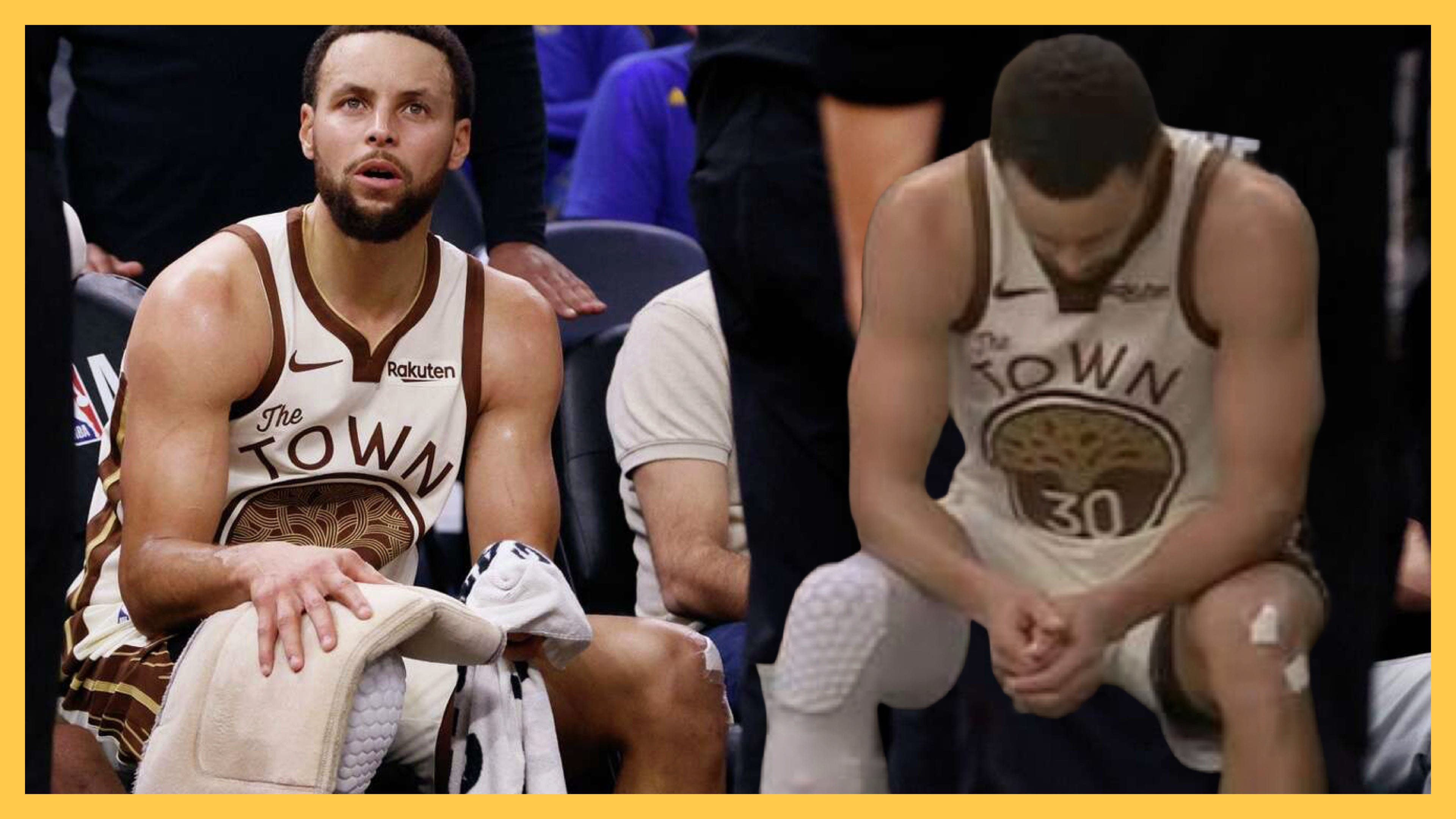
Let me get the important distinction out of the way first. I am not predicting that one Wardell Stephen Curry II will decline a contract extension from the Golden State Warriors or that the franchise does not want to pay him what he’s worth.
Steph has publicly indicated he wants to pursue another extension, “for sure”. Mike Dunleavy, Jr. reiterated last month on the podium that Curry wants to finish his career as a Warrior [see entire 30-minute interview here and with full transcript in the Comments] and most NBA players presented with another massive amount of guaranteed money take it, as soon as the opportunity presents itself.
What I’m arguing is something different: Steph shouldn’t sign yet, not because he should leave, not because the Warriors shouldn’t pay him, not because Curry necessarily owes Joe Lacob a discount after everything he has done for this franchise.
August 29th is the first day he can sign an extension. It doesn’t have to be the day he should. There is one enormous variable that neither Steph nor the Warriors can fully understand on 8/29: his runner’s knee.
Trust can buy you optionality
The conventional logic here is pretty straightforward. Curry is entering the final season of his contract. He’s 38. Golden State wants him to retire a Warrior. Steph wants the same thing.
At the presser, Dunleavy was asked whether anything had changed: “Not to me, no, he hasn’t. That’s always been the message… I’m pretty confident Steph will finish his career here.”
Later, Nick Friedell of The Athletic asked Dunleavy about August 29th and whether he was confident something could ultimately get worked out.
“There’s two things I’m confident about with Steph,” Dunleavy said. “He really, really wants to win and he wants to finish his career as a Warrior.”
That is precisely why I don’t think anybody needs to rush. Normally, an unsigned extension creates uncertainty. With No. 30 and the Warriors, the extraordinary level of trust could actually turn that uncertainty into an asset.
If Steph doesn’t sign on August 29, that doesn’t mean he wants to leave. It doesn’t mean Lacob doesn’t want to pay him. It means they preserve optionality — a term first uttered by former Warriors general manager Bob Myers many years ago and now has become part of lexicon for all thirty NBA GMs (as well as a bad word on Warriors Twitter, apparently) — while acquiring something neither side can manufacture today: More information.
“This thing’s delicate”
There was another Dunleavy answer from that same Zoom call that matters even more. Joseph Dycus of the Bay Area News Group asked about Curry’s knee and how much the Warriors expect him to play this season after Steph appeared in only 43 games last year.
“With the knee, other injuries and then his age, it’s definitely something we have to manage,” Dunleavy said.
Then came that word Taylor Swift made into an auto-chime in the brain:
“My hope would be he plays more than… 43 games last year. I hope he plays more than that this year,” Dunleavy said. “We expect that, but you take nothing for granted, so it’s on the radar. It’s something we have to be mindful of and this thing’s delicate.”
That doesn’t mean Curry’s knee is doomed or that he has some catastrophic structural condition. It certainly doesn’t mean those of us outside the Warriors medical staff should diagnose him, but it does mean that we don’t know.
Which brings me to a conversation we happened to have recently with UCSF orthopedic surgeon Dr. Nirav Pandya.
The number of minutes may not be the real question
If Golden State is effectively trying to keep its powder dry for greater roster flexibility later, can the Warriors afford something resembling a “gap year” when Curry is already 38?
Pandya’s answer changed the way I look at this.
“I worry about the load more than the minutes and what he’s doing during those 32, 33 minutes,” Pandya said.
You see that distinction? Load management gets discussed like arithmetic: 32 minutes becomes 30, 30 becomes 28, sit Steph on the second night of some back-to-backs and we’re good, right?
Maybe, but 28 minutes of Steph Curry aren’t necessarily the same thing as 28 minutes from another NBA player. What makes Steph special is movement, running, cutting, relocating, creating separation, getting bumped and grabbed away from the ball:
And when everything else breaks down, how many Warriors possessions still ultimately become, like, “Steph, save us!”
Dr. Pandya explained that runner’s knee itself can be a broad term. If Curry is dealing primarily with irritated muscles or tendons, reducing his minutes and workload could be exactly what he needs, but Pandya also raised the other possibility.
“Where is it coming from?” he said. “Is it some cartilage irritation, right? And then you’re worried about, ‘Okay, well, if that’s the case then could that get worse over the year?’ Absolutely. Is it just more muscle, tendon stuff, then maybe less concern…”
Again, Pandya was not diagnosing Curry with cartilage damage. He’s explaining why the underlying cause matters. And then he said something that should get everybody’s attention when we’re simultaneously discussing a new multi-year contract:
“What makes his game so special is his movement and you’re trying to limit that? And then you don’t have many other offensive weapons? Yeah, I absolutely do get worried about, does this year mean he’s just going to be degenerating a little bit more?”
That’s the unknown.
So why choose the number now?
Imagine two very different versions of the upcoming season. In the first, Curry’s knee continues giving him problems. Maybe he misses another large chunk of games, or his workload has to be dramatically reduced, or Golden State discovers that the physical demands required for Steph to remain Steph are becoming increasingly difficult to sustain.
Now we’ve learned something. And instead of having already committed enormous future salary to Curry, perhaps next summer Steph and the Warriors can look at the entire situation together and hit what I’ve been calling a “soft reset.”
Steph could take less à la Jalen Brunson or Victor Wembanyama and the Warriors could gain additional flexibility. That cap space could be redirected toward putting a deeper, younger and more sustainable roster around him — pretty much what the LA Lakers were able to do this off-season around Luka Doncic, although it can be argued that the pieces they signed could’ve been better (oh well, that’s their problem), but the bottom line remains: they went on a free agent shopping spree.
That isn’t Steph sacrificing for Lacob’s bank account. That’s Steph investing in Ring No. 5.
Now imagine the opposite: Steph’s knee responds beautifully. The swelling and pain are gone, the Warriors figure out the right workload, Curry plays significantly more than 43 games and demonstrates that he can still withstand the demands of being the center of an NBA offense.
Great! Now you have different information. If Steph wants a huge salary at that point, choose the number accordingly. Dunleavy has essentially made clear that Curry has earned tremendous agency over how the end of this story unfolds.
And even in that healthier scenario, Steph and the Warriors could still explore whether there is some strategic middle ground — the general concept we’ve seen elsewhere when stars structure their compensation with roster-building in mind.
The point isn’t that Curry must take a discount. The point is, why decide how much Curry should make in the future before you know what future Curry looks like?
Maybe preserving Steph means changing Steph
My live discussion with Dr. Pandya led us to uncharted territory. For years, people have wondered how Curry’s game might age. Could there eventually be a little Ray Allen or Kyle Korver in the evolution — not literally turning the greatest shooter ever into somebody standing in the corner, but reducing how often Steph has to manufacture all that movement and separation himself?
“Maybe this runner’s knee kind of speeds up the process in which the Warriors offense changes,” Pandya said.
That’s fascinating. What does Steph at 39 look like? Does he run the same mileage? Does he create as many shots himself? Can someone like Brandin Podziemski or De’Anthony Melton take another step as a creator? My hope was for Brandon Williams to be part of this equation and sure enough, it happened.
Can Jimmy Butler shoulder more offense once healthy? Can Yaxel Lendeborg eventually absorb some responsibility? Or does the player who reduces Curry’s workload not even exist on this roster yet?
Maybe preserving Steph Curry eventually means changing the ecosystem that made Steph Curry possible. That is another thing the Warriors can spend this season learning.
The argument against me is pretty obvious
There is an entirely reasonable response to everything I just wrote: You’re overthinking this; Steph deserves everything, so take the guaranteed money and make sure it’s the max.
I mean, that’s fair. Curry is 38 years old and guaranteed money is guaranteed money. If the Warriors offer him another massive extension, there is an obvious reason to sign it. The financial return on ensuring Steph is a Warrior for two more years is probably immeasurable. And again, Curry himself has already publicly indicated an interest in pursuing an extension.
So this is not my prediction that Steph will walk into Dunleavy’s office on August 29th and say, “Nah, I’m good.” He very well may sign. I simply don’t think he needs to, because Curry possesses something most NBA players approaching free agency don’t: an extraordinary amount of institutional trust.
If Steph doesn’t sign now, then gets hurt, do we really believe the Golden State Warriors are suddenly going to tell the greatest player in franchise history to take a hike?
Incidentally, Lacob didn’t do that to Klay Thompson.
Conversely, does anybody believe Steph needs two additional guaranteed years on paper to prove that he wants to retire a Warrior?
Dunleavy himself said those two things he knows about Curry — wanting to win and wanting to finish here — aren’t going to change on 8/29, Opening Night, the middle of the season or the end of next season. If that’s true, what’s the rush?
Play first. Decide second.
See what the knee does, what the workload does, what the roster does, what Curry looks like at 38, what the Warriors look like when he isn’t playing, whether Golden State needs to change the offense to preserve him — or whether it’s time to hit the hard rest button at the trade deadline, if the Dubs are, like, ten games under .500 or something.
I still think sitting down next summer with a clean cap sheet, with far more information than anybody possesses today is best for the quest for a fifth championship.
After all, if trouble brews in Denver after sending out Peyton Watson to get under the second apron, Nikola Jokic has the excuse he needs to leave the Nuggets. Or if Karl-Anthony Towns isn’t offered an extension from the Knicks for as much as he thinks he deserves, you never know. The leaner Curry can help keep that cap sheet, the better chance of netting a big fish should it start to swim away from the incumbent.
I’ve started to discuss this on the YouTube channel and we’ll look into the projected numbers more and more for the Summer 2027 Warriors cap sheet:
If Steph is still Steph, compensate him accordingly while collectively deciding how much flexibility they want to preserve around him. Either outcome is better informed than making the decision today.
And, friendly reminder, this has been a collaboration between Steph, Draymond Green, Lacob and Dunleavy. The fact that Draymond opted out just to enable the franchise to pursue LeBron James — and then restoring the contract back to its original form when that pursuit came up empty — is the clearest sign of that.
I believe another clear sign of that is when Dunleavy snapped back at reporters after this past February’ s deadline when asked if Green was part of any trade discussions.
As far as the public perception of Steph not signing an extension, I believe that in recent years, the team’s brain trust has always operated at the cost of being judged as incompetent. Friedell even wrote today in The Athletic that the scrutiny will come raining down heavy should Curry not sign an extension until later.
But we saw this happen all summer, anyways. Kirk Lacob even labeled a lot of the hearsay as “garbage”. It is not the style of the Warriors’ brass to come out and defend every move or non-move they make. So if Curry does not sign an extension, he will address it once and they will move on, knowing there is little they can do about the inevitable “garbage” that will arise as discourse from Steph’s decision.
But logically, it behooves him and anyone seeking a fifth GSW banner during his tenure to wait until more information comes in, likely at the very least the February 2027 trade deadline.
This isn’t ultimately about saving Lacob money. It isn’t about asking Curry to give back something he has earned. It’s about aligning Steph’s money, Steph’s body and the Warriors’ roster in whatever combination gives 30 the best chance to do the one thing Dunleavy says he still “really, really” wants to do: win.
Reload that roster. One last time. One last parade. Ring No. 5.
🫶💙💛
Hi Rich, it's Dan Devine aka kingofmyworld19 I really enjoyed this piece
From my naive perspective I would agree with what you’ve written. Not sure how that resonates in the NBA business world. Hope both Steph and GSW can work something out.