

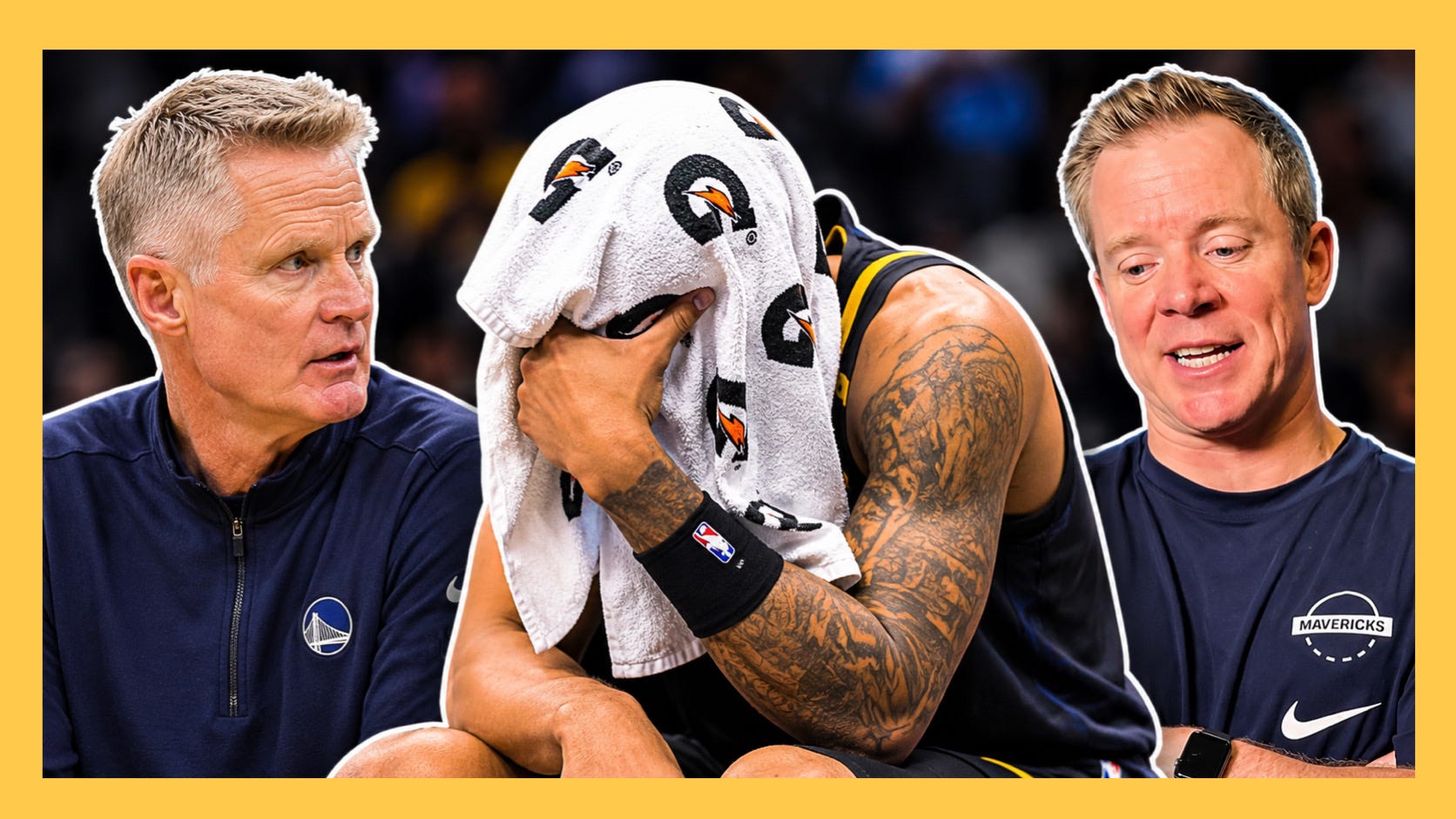
The Golden State Warriors aren’t simply trying to win games without one Wardell Stephen Curry II. They’re trying to figure out who they are without him.
That distinction matters, especially after three straight losses against Houston, San Antonio and New Orleans. The last two were particularly ugly, with Golden State suffering consecutive disastrous first quarters and struggling to generate consistent offense.
It’s tempting to search for one explanation, but basketball rarely works that way, especially when the player around whom an entire offensive identity has been constructed suddenly disappears from the lineup and the Warriors haven’t exactly faced forgiving opponents.
Houston brought athleticism, physicality and length. San Antonio had Dylan Harper, Victor Wembanyama and Stephon Castle, whose defense was another challenge for Yaxel Lendeborg. New Orleans presented its own size and strength advantages. Just consider the contrast between the 6-foot-8, 240-pound Saddiq Bey and 6-foot-2 De’Anthony Melton.
Those matchups don’t explain every missed shot or defensive mistake, but they’re important context when evaluating a team suddenly deprived of its greatest offensive advantage, with Jimmy Butler and Moses Moody also unavailable.
And history suggests the problem isn’t easily solved. Last season, the Warriors finished 37–45, including a 13–26 record in the 39 games Curry missed. They were 24–19 when he played. That’s a pretty dramatic difference, and it underscores how difficult life without Steph has been even before this latest stretch.
Steve Kerr isn’t a perfect coach. No coach is. There are always rotations to question, plays to reconsider and adjustments that could have been made sooner, but expecting Kerr to manufacture Curry’s gravitational pull with a different collection of players isn’t a realistic standard.
Even replacing Steph with another superstar wouldn’t necessarily reproduce his particular effect on an opponent. And when the Warriors have enjoyed the luxury of another extraordinary creator, such as Kevin Durant or Jimmy Butler, they’ve had an alternative way to generate offense.
Right now, they don’t have that luxury, which brings us to Lendeborg and some fascinating comments from a coach who knows him particularly well.
Dusty May understands the challenge
At Tuesday’s Mavericks practice, Dallas head coach Dusty May, who coached Yaxel at Michigan, spoke about the challenge of suddenly changing a young player’s role.
“You’re playing with Steph, you’re playing without Steph,” May explained — transcripts below the paywall. “And so the difference in a role is significant.”
May compared the situation to the Mavericks playing with and without Kyrie Irving. Everyone’s responsibilities shift, but making those adjustments is particularly difficult for rookies navigating the NBA schedule.
His description of Yaxel’s current assignment was especially revealing: “That’s a heavy burden.”
And yet May remains optimistic. He described Yax as a cerebral, intelligent player who never relied exclusively on athleticism. Despite being a 24-year-old rookie, he has relatively little basketball mileage and continues adding skills to his game.
May also emphasized something we’ve already witnessed in Yaxel’s Warriors interviews: his unusual candor. May explained that some teams appreciated Yaxel’s transparency during the Draft process, while others were wary of it. Yax, he said, simply chooses to be authentically himself.
I think that’s an important reminder of whom we’re evaluating here. Yaxel isn’t a finished product, and his honesty about his performances shouldn’t be confused with an inability to improve.
The Yaxel 60-40
Here’s how I’d approach the next stage of his development: roughly 60% player execution and 40% coaching creativity.
These aren’t scientific percentages, nor are they an attempt to distribute blame. They’re a framework for identifying what each side can actually do.
Yaxel’s 60% begins with the things he can control regardless of the play call. His off-ball cuts need to be sharper and more decisive. He must recognize opportunities earlier, move with purpose, reduce avoidable turnovers and keep working even when the ball doesn’t come his way.
That’s part of what I meant in our previous article about Dario Šarić’s “violent cuts”. With Steph unavailable to create advantages through his extraordinary gravity, those fundamental actions become even more important.
But the other 40% matters just as much to the development process. Kerr and his staff can help Yaxel by designing more purposeful opportunities: off-ball screens that free him into advantageous positions, pick-and-roll actions that let him make decisions on the move, and lineups that supply enough physicality and spacing to make those actions effective.
Simply telling a rookie to be aggressive isn’t the same thing as creating an environment in which he can succeed.
That doesn’t mean abruptly turning the Warriors into Yaxel’s team. It means giving him enough structure to develop confidence and recognition without asking him to become Steph overnight.
I’d also be interested in seeing whether Charles Bassey’s natural energy, screening and interior physicality could help establish more force from the opening tip. His defensive execution still needs scrutiny, but his presence is worth considering as Kerr searches for useful combinations.
Finding an identity, not a scapegoat
There’s nothing wrong with being frustrated by an 11-point first quarter. I certainly was. And there’s nothing wrong with questioning specific coaching decisions or individual performances.
But after that initial frustration, I find the basketball much more interesting when we begin asking what the players are learning and what the coaching staff can do to accelerate that process.
No coach has a perfect answer for every roster problem. Even successful coaches elsewhere, including Natalie Nakase with the Valkyries, face difficult personnel decisions and criticism. That doesn’t invalidate their accomplishments or place their decisions beyond examination.
Kerr’s challenge is to build a functional alternative while Curry is unavailable, without abandoning the identity the Warriors will need when Steph, Jimmy and Moses are healthy again.
Those are different objectives, and achieving both simultaneously isn’t easy, so as Golden State heads into Dallas and Memphis, I’m interested in more than the final scores.
Watch Yaxel’s cuts when he doesn’t receive the ball. Watch whether the Warriors screen for him rather than simply expecting him to create. Watch how different lineups affect the physicality of their offense, and whether the team begins possessions with more force.
Those are things we can evaluate even when the results aren’t pretty. The first reaction to losing is often frustration. The second can be curiosity. Somewhere between those two reactions is where we begin to understand basketball a little better.
And perhaps that’s the most rewarding way to experience this particular stretch of Warriors basketball: not as a demand for instant answers, but as an opportunity to watch a new identity take shape.
Below the embedded videos are the transcripts of May, and from morning shootaround today, Morez Johnson, Jr., Yax and Melt:
